
How to Increase Shower Pressure: The Complete UK Guide
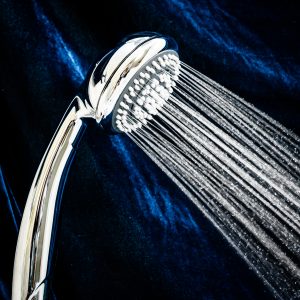
WrightChoice Shower Head
If your shower is more of a sad trickle than a proper wake-up call, you’re not alone. Millions of UK homes deal with weak shower pressure (especially older properties with gravity-fed plumbing). The good news? You don’t have to put up with it. And in most cases, a competent DIY’er can improve their shower pressure in minutes.
This guide covers every practical way to improve your shower pressure, whether you’ve got a gravity-fed system, a combi boiler, or an electric shower. We’ll start with the quick wins you can try today, then move on to the longer-term fixes that make the biggest difference.
First Things First: Check Your Water Flow
Before you start replacing anything, it’s worth knowing what you’re actually dealing with. A quick test takes two minutes and tells you whether the problem is your shower, your pipes, or your whole system.
The jug test:
- Grab a 1-litre measuring jug and a timer.
- Hold the jug under your shower head with the water running at full.
- Time how long it takes to fill.
If it takes longer than 15 seconds, your flow rate is below 4 litres per minute — that’s officially low. A flow of 6 litres a minute is recognised as a ‘good shower’ by traditional UK standards and anything between 5 litres a minute and 8 litres a minute is the perfect flow to wash away suds quickly. Less flow means you need to shower longer to wash away suds, anything more, and you are wasting water.
As well as flow, your water pressure is also critical. A shower feels good if it feels powerful. To get a decent spray pattern from the good shower head with an invigorating spay pressure on your skin, you need a minimum pressure of 0.2 bars. Understanding the science behind what makes a good shower is discussed in detail in this post “What is a good shower”.
Why this matters: knowing your starting point helps you pick the right solution. A shower head swap might help whatever the flow or pressure you have, but below 0.2 bar, which is the typical pressure for an upstairs shower fed by gravity, you need a shower pump. Getting this right the first time saves money. If there is any doubt, then it is worth trying a more efficient shower head for a cost effective way to solve the problem.
Quick Fixes You Can Try Today
These cost little or nothing and can make a noticeable difference. Start here before spending money on bigger solutions.
- Clean your shower head
Limescale is the silent pressure killer, especially in hard water areas. Those tiny nozzles clog up over months and gradually choke the flow. You barely notice it happening until one day the shower feels useless.
How to do it: unscrew the shower head, drop it in a bowl of white vinegar (or a 50/50 vinegar-water mix), and leave it for 2–4 hours. Give it a scrub with an old toothbrush, rinse thoroughly, and refit. You might be surprised how much of a difference this makes.
Before putting the shower head back:
Check the flow and see just how much water the shower head is holding back. If you have an electric shower the flow may be the same with or without the shower head.
A better shower head will make the overall electric shower experience better but to understand how to make a real difference please read this post on “Boosting Electric Showers”.
- Check for a flow restrictor
Many modern shower heads come with a built-in flow restrictor — a small plastic or rubber disc designed to save water. That’s fine if your pressure is already strong. But if it’s weak to begin with, the restrictor makes things worse.
Check your shower head’s manual or look inside the fitting where the hose connects. If there’s a small disc or washer with a tiny hole, that’s likely the restrictor. Removing it is usually as simple as popping it out with a flat-head screwdriver. Just be aware: removing it will increase water usage.
- Make sure your valves are fully open
It sounds obvious, but partially closed valves are one of the most common causes of low pressure — and one of the easiest to miss. If any plumbing work has been done recently (or if you’ve just moved in), check:
- The isolation valves under sinks and behind toilets near the shower.
- The main stopcock (usually under the kitchen sink or where the water main enters the house).
- Any gate valves on pipes feeding the hot water cylinder.
A valve that’s 90% closed can restrict flow significantly. Turn them all fully open (anti-clockwise), and then ¼ turn clockwise.
Whilst you are looking at the main stop tap try turning it completely shut (clockwise to close). Check which taps and showers go off and those that do not, so you know which tap or shower is mains pressure and what if any are gravity fed. You may find the hot to the shower is gravity fed and the cold is mains pressure.
- Check your shower hose
Kinked, twisted, or narrow-bore hoses restrict water flow more than most people realise. If your hose is old, stiff, or has visible kinks, replace it. If the bore is 8mm or under a wider-bore hose with10mm internal diameter is a cheap upgrade that can help.
Fixes by Plumbing System Type
Here’s where it gets specific (but don’t let this overwhelm you!). The right solution depends on what kind of plumbing system you have. Not sure which you’ve got? Here’s a quick way to tell:
- Gravity-fed system: you have a cold water tank in the loft or cupboard and a hot water cylinder (usually in an airing cupboard). Many older UK homes and if you have this setup then this video is perfect for you “Gravity systems explained”.
- Combi boiler: no water tanks, no cylinder. The boiler heats water on demand directly from the mains. Common in newer builds and smaller homes.
- Electric shower: takes cold water directly from the mains and heats it with an electric element inside the unit. Often fitted alongside either of the above systems.
- Unvented cylinder: a sealed pressurised hot water cylinder fed directly from the mains — often installed as an upgrade in older homes. It’s a common misconception that unvented cylinders eliminate pressure problems. Many homes with them still struggle, and the Shower Power Booster is the only pump specifically designed to boost pressure on either side of an unvented cylinder. ALL HEATPUMP SYSTEMS HAVE UNVENTED CYLINDERS.
Gravity-Fed Systems
If you have a gravity-fed system, weak shower pressure is almost certainly down to one thing: the height difference between your cold water tank and your shower head. Gravity-fed systems rely on — you guessed it — gravity. The higher the tank sits above the shower, the more pressure you get. The rule of thumb is simple: every 1 metre of height difference gives you roughly 0.1 bar of pressure.
In a typical two-storey house with the tank in the loft, the difference between the tank and a first-floor shower might only be 1–2 metres. That’s 0.1–0.2 bar — barely enough to rinse shampoo out properly.
Your options:
- Raise the cold water tank. If your tank is sitting on the loft floor, raising it onto a sturdy platform can add extra height and therefore extra pressure. Even 0.5 metres helps. Just make sure the platform is strong enough — a full tank is heavy.
- Fit a shower pump. This is the most effective fix for gravity-fed systems by a long way. A pump sits between your hot water cylinder and the shower, boosting the flow so you actually get a decent shower.
The key advantage of a pump is that it addresses the root cause. You’re not masking the problem with just a different shower head — you’re actually increasing the water pressure reaching your shower. Although a good shower head is essential and you might already have a good shower head, doubling the pressure with a shower pump will increase the flow of a poor shower by 50%
Some pumps are large, expensive, and need an electrician to wire them in. But not all of them. The Shower Power Booster, for example, fits inline in about 15 minutes using a pipe cutter and two spanners — no electrician needed and can be fitted by any competent DIY’er. The Shower Power Booster pumps are a fraction of the cost of a traditional twin-impeller pump, and works with all plumbing systems. There’s a reason thousands of UK homeowners rate it 5 stars on Trustpilot.
Combi Boiler Systems
Combi boilers are fed directly from the mains, so your shower pressure depends on your mains water pressure and the flow rate from the boiler. If your mains pressure is decent but your shower is weak, the bottleneck is usually the pipework from the boiler to the shower.
Quick checks:
- Test your mains pressure. Run the cold kitchen tap at full blast. If the flow there is strong, your mains pressure is fine and the issue is downstream of the boiler
- Reduce simultaneous demand. Combi boilers heat water on demand. Running the hot tap in the kitchen while someone showers splits the flow. Try to avoid running multiple hot water outlets at the same time. If you notice that a shower suffers if you run other showers and taps, that shower could be boosted and protected with a pump.
Longer-term solutions for combi systems:
- Fit a pump on your incoming mains cold. If your mains pressure drops below 1 bar, your combi boiler’s gas valve shuts off — that’s why the water goes cold mid-shower. Fitting a Shower Power Booster on the incoming cold supply keeps pressure above the boiler’s cutoff point. A double pump (SP21S) adds 0.4–0.6 bar and can protect flow rates of around 6 L/min to showers. It’s WRAS-approved for use on the mains cold supply, fits in about 15 minutes, and doesn’t require an electrician. You can also fit a single SP2B on the hot-side feed from the boiler to a specific shower — this gives that shower flow priority over other hot outlets in the house.
- Fit a pump on the hot water pipe from the combi boiler. This is the most common solution to solve pressure problems in combi boiler systems.
- Upgrade to a higher-kW boiler? A 24kW combi can deliver decent flow to three separate showers at once. If any one of the outlets struggles than the problem is pressure and upgrading the boiler will not improve that.
- Contact your water company. If your mains pressure is below 1.0 bar, your water supplier may have an obligation to investigate. They can check for supply-side issues and sometimes carry out remedial work at no charge.
Important note: traditional power showers (the ones with a built-in pump) don’t work with combi boilers — they’re designed for gravity-fed systems with a hot water cylinder, and fitting one to a combi can damage the boiler. A pump on the incoming mains cold or hot outlet feed is a completely different approach, and it’s the right one for combis.
Electric Showers
Electric showers heat cold mains water on demand using an internal element. Their pressure depends entirely on your incoming mains pressure and the shower’s kilowatt rating.
Why electric showers often feel weak: a 7.5kW or 8.5kW electric shower can only heat a limited amount of water per minute. To deliver warm water, the unit restricts the flow. That’s why electric showers often feel weaker than mixer showers, even when the mains pressure is perfectly fine.
What you can do:
- Fit a pump on your incoming mains cold. Electric showers cut out when the incoming mains pressure drops below around 0.8 bar — the unit senses insufficient flow and shuts off as a safety measure. Fitting a Shower Power Booster (SP2B) directly on the mains cold feed to the electric shower keeps pressure above that threshold. For lower-kW showers (7.5kW), a single SP2B is usually enough. For higher-output showers (9.8kW or 12.5kW), which need more flow, a double pump SP21S gives a bigger boost. No electrician needed — the pump runs off a 12V transformer that plugs into a standard socket.
- Upgrade to a higher-kW unit. A 10.5kW or 10.8kW electric shower can heat more water per minute, meaning better flow without sacrificing temperature. This does require adequate electrical supply — a qualified electrician should check your cabling first.
- Clean or replace the shower head. Limescale builds up fast in hard water areas. Descale the shower head and nozzles regularly.
When to Call a Professional
Most of the fixes above are DIY-friendly. But there are situations where you should bring in a qualified plumber or heating engineer:
- You suspect a leak in the pipework (unexplained damp patches, your water bill has spiked).
- Your boiler pressure keeps dropping after repressurising — this could indicate a leak in the sealed system.
- You want to move or raise the cold water tank and aren’t confident working in the loft.
- You’re upgrading your boiler or electrical supply.
- You’ve tried everything above and the problem persists — a plumber can run a full system diagnostic.
Frequently Asked Questions
❓ What is normal shower pressure in the UK?
Most UK homes have mains water pressure between 1.0 and 2.0 bar. For a comfortable shower, you generally want a flow rate of at least 6 litres per minute. Below that, the shower starts to feel noticeably weak. If your flow rate is below 4 litres per minute, you’ll likely need a pump to get a satisfying shower.
❓ Can a new shower head increase pressure?
A new shower head can make low pressure feel stronger — designs with fewer, smaller nozzles concentrate the water into tighter jets, which creates the sensation of more pressure. But it doesn’t actually increase the water pressure in your pipes. If your pressure is very low (below 0.2 bar), a shower head swap alone won’t solve the problem.
❓ Do shower pumps work with combi boilers?
Traditional power showers (the large twin-impeller pumps designed for gravity-fed systems) should not be fitted to combi boilers. But the Shower Power Booster is different — it’s WRAS-approved for use on the incoming mains cold supply, which makes it compatible with combi boiler systems. Fitted before the boiler, it prevents mains pressure from dropping below the boiler’s cutoff point. You can also fit one on the hot-side outlet from the boiler to boost flow to a specific shower. The key is fitting it in the right place — always check the installation guide for your system type.
❓ Is low water pressure the same as low flow rate?
Not exactly. Pressure is the force of the water measured in metres head or in bar (10 metres head = 1 bar), and flow rate is the volume of water delivered over time (measured in litres per minute). You can have decent pressure but low flow if the pipes are partially blocked or too narrow. In practice, fixing one usually improves the other.
❓ How much does it cost to fix low shower pressure?
It depends on the cause. Cleaning a shower head costs nothing. A new shower head is £15–£50. A shower pump ranges from around £150 for an inline booster like the Shower Power Booster up to £300–£500+ for a traditional twin-impeller pump (plus installation). A new boiler is £2,000–£4,000 installed. Always start with the free and cheap fixes first.
❓ Will a shower pump make my shower noisy?
Some traditional pumps can be noisy, especially if poorly installed or fitted without anti-vibration mounts. Inline boosters like the Shower Power Booster are quieter than most twin-impeller pumps because of their compact design. Fitting the pump on a solid surface (not directly on floorboards) and using flexible hose connectors reduces vibration and noise.
Your Next Step
Don’t overthink it. Start with the free fixes: clean the shower head, check the valves, and do the jug test so you know your flow rate. If the pressure is still poor after that, a Shower Power Booster pump is almost certainly the answer — and it works whether you’ve got a gravity-fed system, a combi boiler, an electric shower, or an unvented cylinder.
Thousands of UK homeowners have gone from a dribbling shower to a proper one without calling a plumber. You can too. Check your system type, pick the right solution from this guide, and give your shower the pressure it deserves!