
Best DIY Shower Pump UK: The Complete Comparison Guide (No Plumber Needed)
If you’ve been putting up with a dribbling shower for longer than you’d like to admit, you’ve probably already looked into shower pumps. And you’ve probably come away confused.
Some products cost £150. Others cost £500 — before the plumber’s bill. Some say they need an electrician. Some claim you can fit them yourself. The forums are full of people discussing “negative head” and “Surrey flanges” and “fused spurs,” which makes the whole thing feel a lot more complicated than it should be.
It doesn’t have to be. There are really three categories of shower pump in the UK, and once you know which one applies to your situation, the decision becomes straightforward. This guide breaks it down honestly — including where a cheaper option makes sense, where it doesn’t, and when you genuinely need a plumber.
Why Is Your Shower Pressure So Weak?
Before you buy anything, it’s worth knowing why your shower is struggling. The fix depends on the system.
Many older UK homes — anything built before roughly the mid-1990s — use a gravity-fed system. Cold water comes from a tank in the loft; hot water is stored in a cylinder below it. Gravity does the work, which means your pressure is limited by how high the tank sits above your shower head. If the distance between tank and shower head is only a metres, the pressure will always be low.
Homes with a combi boiler run everything directly off the mains. That should mean decent pressure — but if your incoming mains supply is weak, or the boiler cuts off because pressure drops below 1 bar, you’ll still get a poor shower. If your shower is a long way from the boiler you’ll get a poor shower.
Unvented cylinders are increasingly common in newer homes and should provide better pressure but thousands of homes with unvented cylinders still have pressure problems, especially if incoming mains pressure fluctuates or the shower is a long way from the tank.
Understanding your system tells you which pump will actually work. The wrong pump fitted to the wrong system is money wasted.
Three Types of Shower Pump — And Why It Matters
DIY Inline Pumps (12V — Fit Yourself in Minutes)
These are compact, low-voltage pumps that sit directly on the pipe feeding your shower. You cut a section of pipe, the pump goes in, two compression joints, and the transformer plugs into a standard 3-pin socket. No cylinder drain-down. No electrician. No plumber’s visit.
The key feature is the voltage: these pumps run on 12V DC — the same as a car battery. They are fully waterproof and legal to install inside bathroom zones where UK electrical regulations prohibit mains-voltage appliances.
Shower Power Booster Pumps fall into this category.
Traditional Cylinder-Mounted Pumps (240V — Plumber and Electrician Required)
These are the pumps that dominate plumbing merchant catalogues: Stuart Turner Monsoon, Salamander CT Force, Grundfos Amazon (now largely discontinued). Twin-impeller, mains-voltage, hard-wired to a fused spur.
They require a plumber to drain the hot water cylinder, fit Surrey or Essex flanges, and mount the pump on anti-vibration feet. Then an electrician hard-wires the unit. It’s a half-day to full-day job. These are genuine professional installations — not a DIY project for most homeowners.
They’re powerful and reliable and well suited to larger homes looking for a single pump to improve the flow of multiple showers and taps. But they’re not for everyone.
Generic Amazon Booster Pumps (240V — Cheap, But Read the Small Print)
A search for “shower pump” on Amazon will surface dozens of cheap inline pumps — Nordstrand, EVERGD, and an assortment of unbranded Chinese imports. Prices range from £25 to £60, they look similar to DIY inline pumps, and many are explicitly marketed as DIY-fittable.
The problem is the voltage. Most of these are 240V AC mains voltage — the same as a kettle. Under UK wiring regulations (BS 7671), 240V appliances are prohibited in bathroom zones 0, 1, and 2. Fitting one inside a bathroom may be illegal, and your home insurance may not cover any damage arising from it. None carry WRAS approval for UK potable water systems either.
More on this in the safety section below.
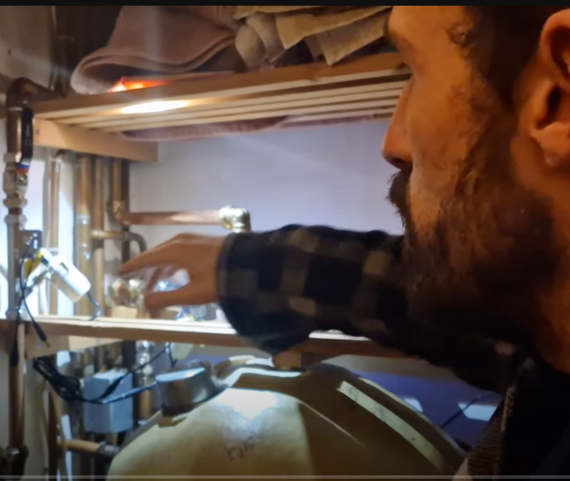
DIY Inline Pumps Compared: Shower Power Booster vs. Salamander TapBoost
These are the two serious options if you want a pump you can fit yourself without calling a plumber or an electrician.
UK-made by Flowflex Components Ltd, a Cheshire manufacturer with over 60 years in British plumbing. The Shower Power Booster pumps run on 12V DC, draws 12.6 watts at 5 L/Min — roughly the power of a low-energy lightbulb — and deliver a maximum flow of 9 L/Min, pressure tested to 4 bars of sustained pressure. It fits any 22mm or 15mm copper or plastic pipe using compression joints, and can be installed in any orientation (the only restriction is don’t fit it horizontal with the motor pointing upward).
Installation is genuinely straightforward with a 3 step installation: cut 110mm from the pipe using a pipe cutter, insert the pump, tighten two compression joints, plug the transformer (a standard 3-pin plug) into any socket up to 15m away. Most people are done in 15–20 minutes. No cylinder drain-down. No electrician. No Surrey flange.
It works with every UK plumbing system: gravity-fed, mains, combi boiler, unvented cylinder, Fortic tanks, and electric showers. That breadth of compatibility is unusual — most pumps don’t cover this range.
2,000 5 Star Trustpilot reviews (and counting). WRAS approved. 2-year warranty as standard, 3 years with the “Ultimate Care Pack”. View the full SPB product range at showerpowerbooster.co.uk.
Salamander TapBoost
The TapBoost is a 12V DC inline pump with a 15mm compression inlet and a ½” BSP male outlet. Salamander is an established British pump brand with a good reputation.
Where TapBoost differs: it boosts a single outlet only, it’s designed for gravity and mains systems (not combi boiler, unvented or electric showers), and its installation guidance explicitly references compliance with Water Supply Regulations, Wiring Regulations, and Building Regulations — language that positions it as “plumber-preferred” rather than “homeowner-ready.” It’s not impossible for a competent DIYer, but the framing pushes you towards a trade installer.
Pricing is similar — roughly £125–150 (check current price with your retailer). For absolute quiet in a gravity or mains system boosting one outlet, TapBoost is worth considering. For everything else — combi boilers, unvented systems, multiple orientations, full-house use — the Shower Power Booster is the more capable option.
Why Traditional Pumps Aren’t DIY (And What They Really Cost)
Stuart Turner Monsoon, Salamander CT Force, Grundfos: these are excellent pumps. For large gravity-fed households that need to boost multiple bathrooms simultaneously at high flow, a traditional twin-impeller pump may still outperform an inline DIY pump. They have their place.
But the installed cost is significant. The pump alone typically runs from £350 upward. A plumber needs to drain the hot water cylinder, fit a Surrey or Essex flange, and mount the pump properly — that’s typically £400–700 in labour, depending on where you live. Add a qualified electrician to hard-wire the unit to a fused spur and you’re looking at £600–900+ total for a straightforward installation.
There are also system limitations most buyers don’t know about: traditional cylinder-mounted pumps only work on gravity-fed vented systems. If you have a combi boiler, an unvented cylinder, or a mixed mains/gravity system, these pumps don’t apply.
When should you seriously consider a traditional pump? If you’re running multiple bathrooms simultaneously from a large gravity system and need consistent high flow across all of them at once, it’s worth a call to a plumbing specialist. For a single shower, one or two bathrooms, or any non-gravity system, an inline DIY pump is almost certainly the right answer.
Are Cheap Amazon Shower Pumps Safe?
The short answer: many aren’t bathroom-legal.
UK electrical regulations (BS 7671) define bathroom “zones” based on proximity to water sources. Zone 0 is inside the bath or shower. Zone 1 is directly above it. Zone 2 extends outward from the shower area. In all of these zones, only SELV (Safety Extra Low Voltage) devices — 12V DC or similar — are permitted. A 240V AC appliance in these zones is non-compliant.
Most cheap Amazon inline pumps are 240V AC. The Nordstrand 90W is mains-voltage. So are most unbranded imports. Fitting one inside a bathroom zone isn’t just a technicality — it’s a safety issue and potentially a building regulations violation that could affect your home insurance.
Beyond the voltage problem, generic pumps typically carry no WRAS approval. That means they haven’t been independently tested and certified for use in UK potable (drinking) water systems — which is a legal requirement under the Water Supply (Water Fittings) Regulations 1999. They also tend to consume 90–120 watts, which is seven to ten times SPB’s 12.6W — the running costs add up.
Reliability is the other issue. Amazon reviews for this category frequently mention failures within weeks or months, and warranties — where they exist — are often 30 days or none at all.
The low headline price is real. The hidden costs and risks aren’t always obvious until later.
How to Choose the Right Pump for Your System
You have a gravity-fed system (cold tank in the loft, hot cylinder below it): This is SPB’s home territory. Fit an SP2B on the hot feed pipe after the vent pipe for whole-house boost, or directly on the branch pipe feeding your shower for a single-outlet boost. If both hot and cold pressure are low, the SP22S double pack puts one pump on each feed.
You have a combi boiler: Traditional cylinder pumps won’t work here — they require a vented gravity system. TapBoost’s guidance suggests it’s not designed for combi systems either. The Shower Power Booster is designed for combi installations: fit the SP21S on the incoming mains cold to maintain pressure above 1 bar and stop the boiler cutting off. For a specific shower, fit on the hot side pipe from the combi.
You have an unvented cylinder (sealed system): The SPB is the only pump designed specifically to work with unvented systems — on the hot side, the cold side, or both. Confirm your system type and call the SPB helpline if you’re unsure how to position the pump.
You have an electric shower that’s cutting out: Fit the SP2B on the incoming mains cold feed to the electric shower. A 7.5kW shower needs 3.5 L/Min — single SP2B. A 9.8kW or 12.5kW shower needs 4.7–6 L/Min — the SP21S double-boost pack.
You have negative or zero head (shower head above the cold water tank): The SP2B automatic pump needs a minimum natural flow of 1.5 L/Min to activate. In negative head situations, this may not be reliable. You need the SP1 manual pump, or the SP21S. See the negative head guide on showerpowerbooster.co.uk for your specific setup.
You need to boost multiple bathrooms simultaneously from a gravity system with high demand: This is where a traditional twin-impeller pump may still be the stronger option if you have very high simultaneous demand across three or more bathrooms. The SP22S (two pumps, one on hot and one on cold) delivers a whole-house balanced boost and is equivalent to a 3kW power shower — enough for most households. But if you have very high simultaneous demand across three or more bathrooms, call the SPB helpline to discuss before buying: 01928 620 099.
Real Customer Experiences
The best proof isn’t what a brand says about itself — it’s what customers say after they’ve fitted it and lived with it.
“I have a gravity-fed system in my bungalow and the water pressure just wasn’t good enough. The Shower Power Booster sorted it straight away.”
“A simple to install solution to my weak shower – considerably less effort than installing a shower pump. All done from start to finish in under an hour and has made a marked improvement to the quality of the shower.”
“We had a loft extension and a Mira Digital Activate shower was installed to the en suite. With the combi boiler on the ground floor the shower would cut out mid use!… SP22S boosters fitted to the hot and cold feeds after the boiler and yes the shower no longer cuts out. Very pleased and the shower is working top notch”
Those are from Trustpilot, where SPB sits at 5 stars with nearly 2,000 reviews. They’re the kind of reviews you get from customers who actually fitted the pump themselves, saw it work, and came back to write about it. The pattern across the reviews is consistent: instant improvement, easy installation, years of reliable service.
Frequently Asked Questions
Do I need an electrician to fit a shower pump?
Not for the SPB or TapBoost. Both run on 12V DC via a standard 3-pin plug that goes into any socket up to 15 metres away. Traditional 240V cylinder pumps (Stuart Turner, Salamander CT) do require a qualified electrician to hard-wire them to a fused spur.
One note: if you choose to wire the SPB’s transformer into a lighting circuit rather than use a plug socket, that’s technically electrical work that should be done by a competent person under Part P in England. The plug-in installation requires no such notification. A consumer can fit a simple electrical spur (fused connection unit) in the UK, but it must be done with caution and technical competence
Is it safe to fit a shower pump in the bathroom?
A 12V DC pump is fully waterproof and compliant with UK bathroom zone regulations (BS 7671). Mains-voltage 240V pumps are prohibited in bathroom zones — fitting one inside a bathroom may breach building regulations and affect your home insurance. Always check the voltage before you buy: if it doesn’t specifically say 12V DC, check the specification sheet carefully.
How long does it actually take?
For an SPB: most people are done in 15–30 minutes, including clearing up. The job is cutting 110mm of pipe, inserting the pump, tightening two compression joints, and plugging in the transformer. If you’ve ever fitted a radiator valve or a washing machine hose, this is the same skill level. If you’ve never cut a copper pipe before, the first cut takes a bit of nerve — but a pipe cutter is a straightforward tool and the cut doesn’t need to be surgical.
Will it work with my combi boiler?
Almost certainly, yes — but the positioning matters. See the combi-boiler installation page for system-specific installation diagrams.
What if I make a mistake during installation?
The most common issue is air in the pipes — fixed by running the pump at full flow for a few minutes to purge it. If something’s not right, the SPB customer helpline is available Monday–Friday: 01928 620 099. Alan Wright (the inventor of Shower Power Booster)’s team has helped thousands of homeowners work through installation questions.
The Bottom Line
Most UK homeowners with weak shower pressure don’t need a plumber. They need the right information — and the right pump.
If you have a gravity-fed system, a combi boiler, an unvented system, or an electric shower system, and you want to fix the pressure yourself this weekend, a 12V inline pump is the straightforward answer. It fits in minutes, plugs into a socket, and costs around — a fraction of what a traditional pump installation would set you back.
The Shower Power Booster SP2B is the most capable option in this category: all-system compatibility, UK-made, WRAS-approved, nearly 2,000 five-star reviews, and a two-year warranty. The Salamander TapBoost is a legitimate alternative for single-outlet gravity or mains boost if quiet operation matters more to you than broader system compatibility.
Generic Amazon pumps look affordable. Most aren’t bathroom-legal. Traditional cylinder pumps are powerful. Most homes don’t need one, and the installed cost is substantial.
Find the right pump for your system at showerpowerbooster.co.uk